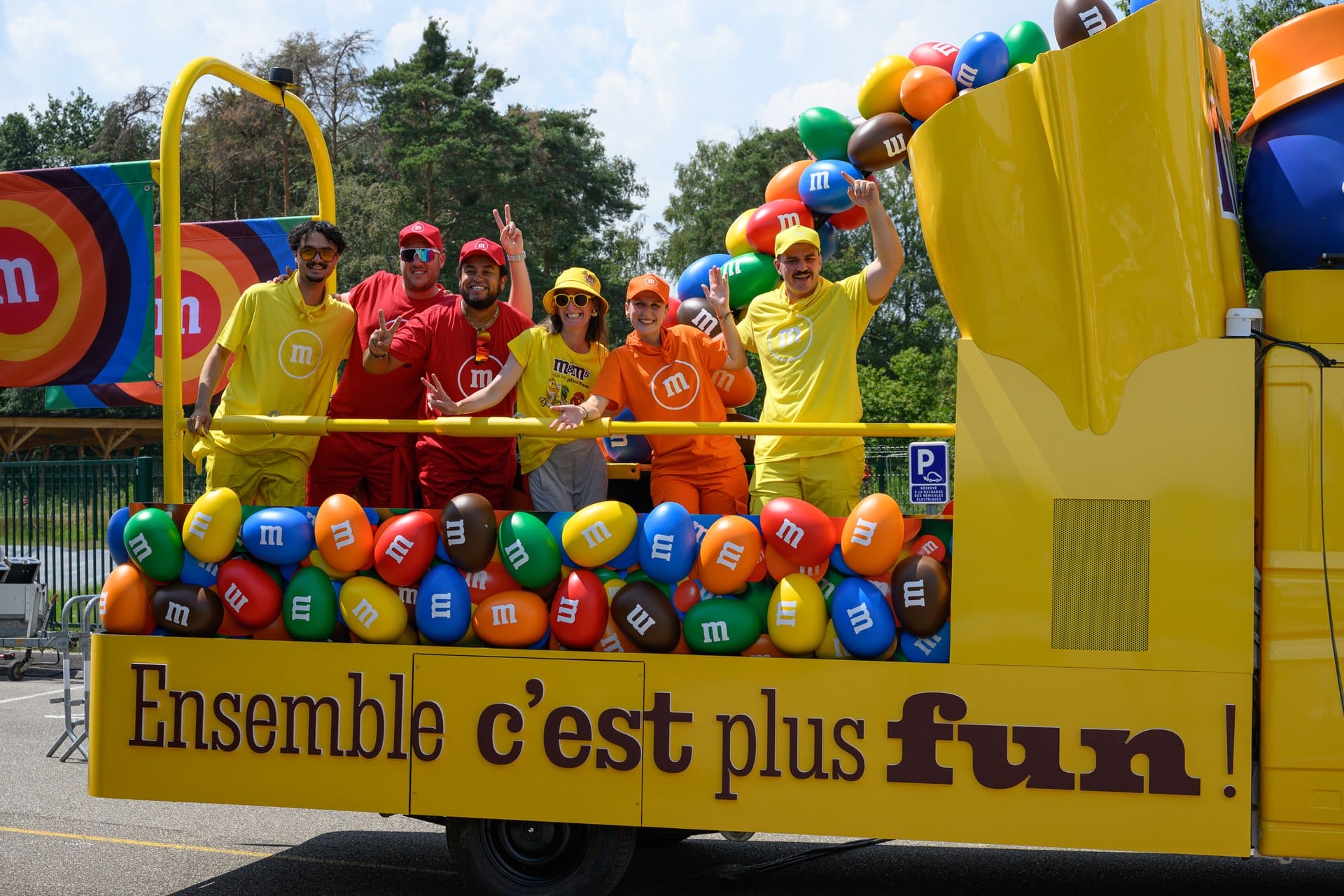
M&M’S Tour de France caravan. © Cyril Bécard / Mars Wrigley
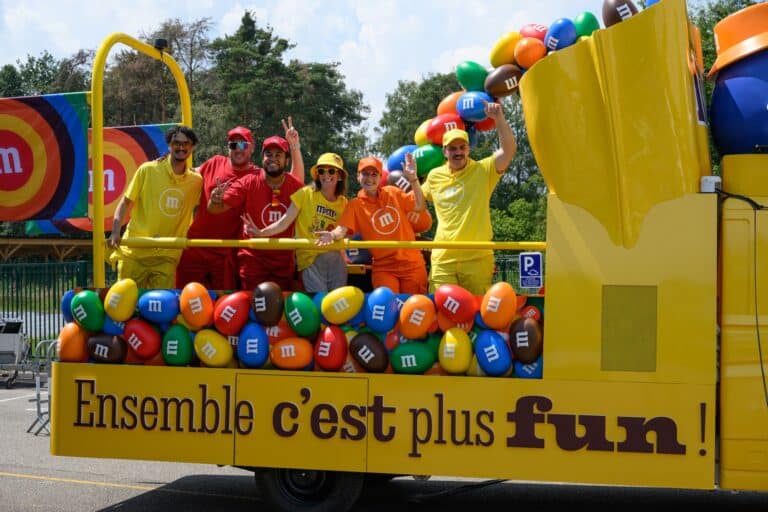
Everyone watches the riders, but the sharper brand contest rolls past well ahead of them. It’s the caravane publicitaire, the Tour de France’s roadside procession of branded vehicles, and for its first-ever Tour, M&M’S has put in one of the standout entries: six custom vehicles carrying more than 600 giant M&M’S characters, animated by 23 “caravaniers.” Unveiled at the Stage 3 start in Carcassonne on 7 July, it’s running the full route to the finish on 26 July, and it is difficult not to grin at.
The caravan is serious real estate, even if brands often overlook it. Running since 1930, the procession is, by French press estimates, a convoy of around 150 vehicles stretching some ten kilometres, passing roughly two hours before the peloton and delivering about half an hour of spectacle to roadside crowds in the millions over three weeks. Those figures describe the whole caravan rather than any single brand, but they explain the appeal: a captive, good-humoured, moving audience that actually waits by the road for the show.
What lifts M&M’S’s entry above a very large candy float is the story bolted underneath it. The convoy rolls out of Mars’s Haguenau plant in Alsace, the brand’s largest European manufacturing site, which on the company’s own figures has run for more than 50 years, produces around 50 billion M&M’S a year and exports roughly 70 percent of them to 40 countries. That “50 years of European manufacturing” thread gives the spectacle a reason to exist beyond “look at us.”
The build is designed to be played with, not just watched. Across the route, the spokescandies chase “Yellow,” disguised as a spectator, a running gag that turns a procession into a narrative. M&M’S is an official supplier to both the men’s Tour and the Tour de France Femmes avec Zwift, reported in French trade as a multi-year, 2026-2028 arrangement, with this as its debut. It plans to hand out some 800,000 sachets and has activated more than 1,500 points of sale, though those are inputs and intentions rather than proven results.
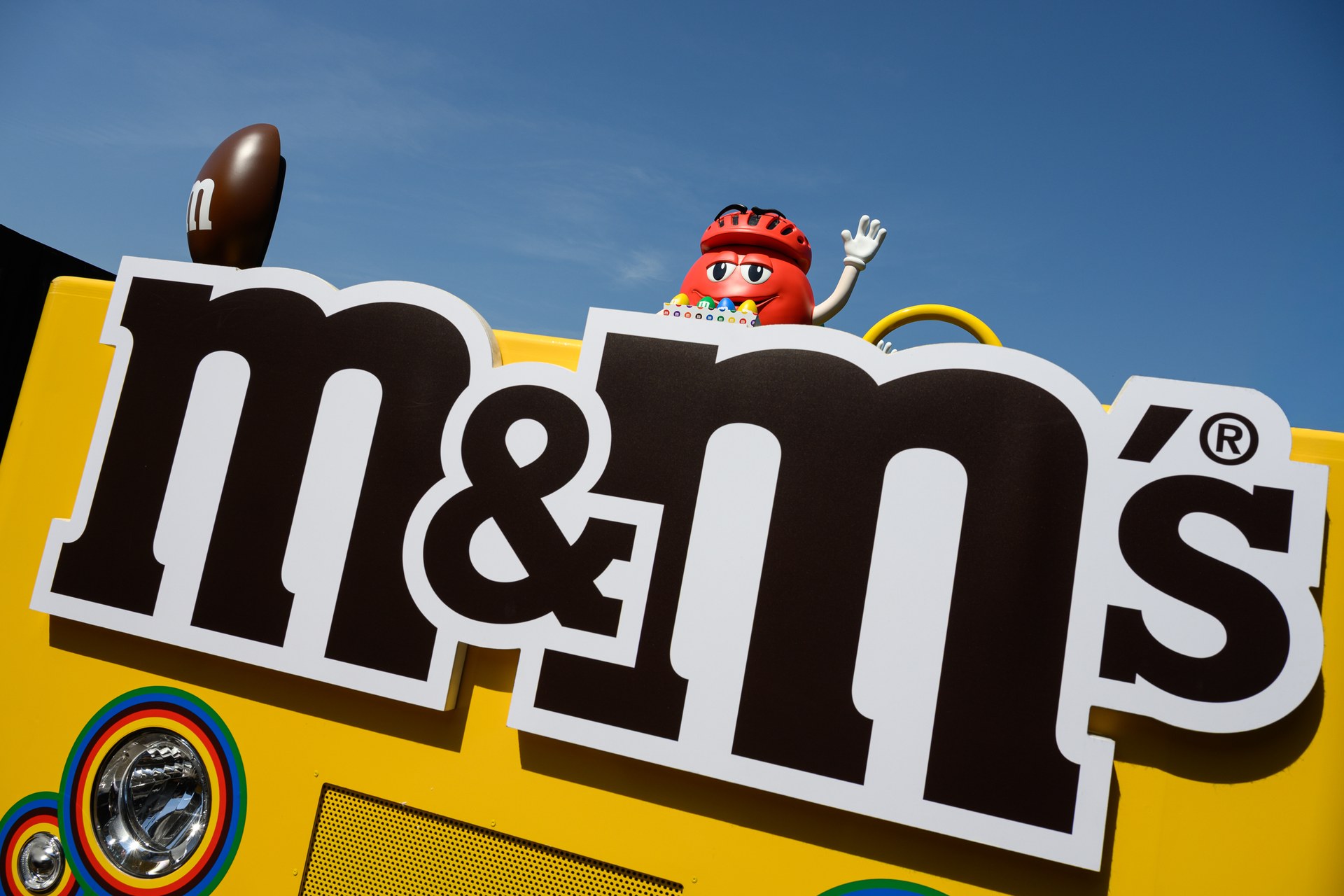
There’s a social layer too: a creator team fronted by Djayson Karavane, whose name puns on caravane, plus off-route “Détour de France” stops with mountain-bike champion Loïc Bruni and a 3D animation for the Champs-Élysées finale.
For brand teams, the interesting lesson is the siting. The roadside caravan is a genuine, under-considered battleground for brand activation: an audience that is captive, in a good mood, and actively waiting, French research cited by the brand’s team suggests 57 percent of respondents would want the caravan to pass near their home. Anchor that spectacle to a real story, as the Haguenau plant does here, let people be in the moment, and you have participation a static billboard can’t buy.
The honest caveat is that the eye-popping numbers belong to the caravan, not to M&M’S’s six trucks, and no brand-specific footfall, sales or impression figures exist. Marketing director William Salhany has framed the goal as becoming the French public’s favourite caravan, which is a stated ambition, not a scoreboard. So is 600 giant M&M’S real brand-building or a charming confection on wheels? The manufacturing anchor is the strongest argument for the former, but the proof isn’t in yet.
It works because the Tour hands a brand a near-century-old ritual and a crowd that turns up for it. You can’t manufacture that somewhere else. The lesson is the principle, find the ritual and join it with a real story, not the float itself.