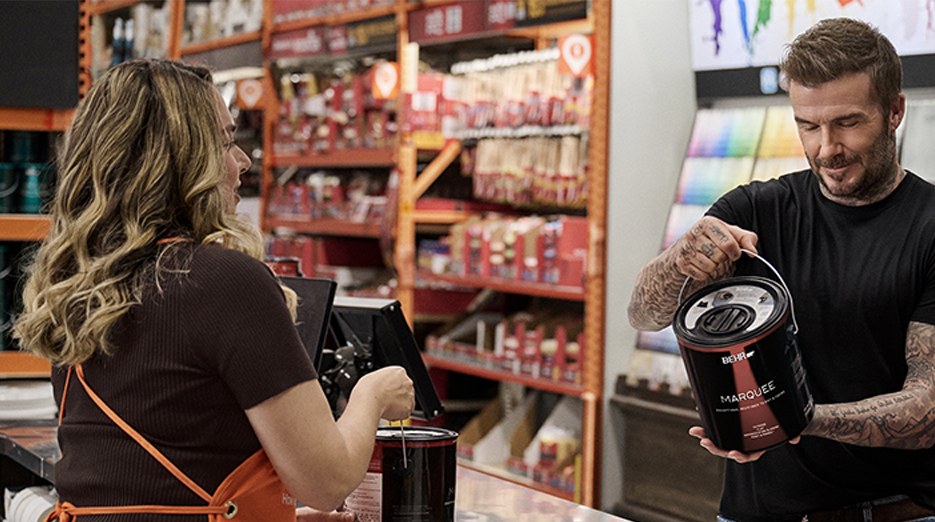
David Beckham fronting The Home Depot’s FIFA World Cup 2026 partnership at a BEHR paint counter. (Photo: The Home Depot)
Among the brands you’d expect to find at a World Cup, the giants of sportswear, soft drinks and tech, a hardware store is not the obvious name. Yet there is The Home Depot, the self-styled Official Home Improvement Retailer of the FIFA World Cup 2026, fronted by David Beckham and running fan-zone activations at the FIFA Fan Festivals. A drill-and-paint retailer at the planet’s biggest football event is exactly the kind of category mismatch that should look forced. The interesting thing is that it mostly doesn’t.
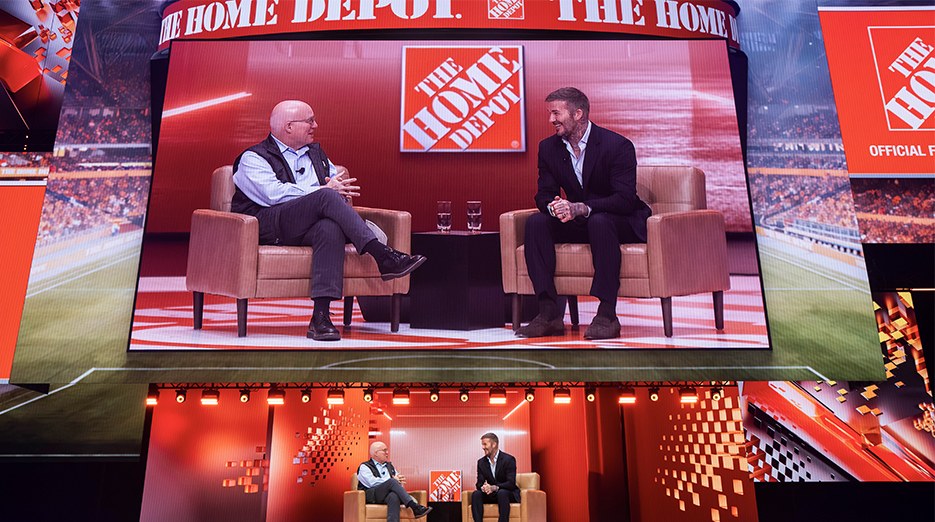
The reason is a genuine insight, not just a logo on a marquee. DIY is, at heart, building and making, so Home Depot has reframed “home improvement” as “build your own football moment.” The play is participation, not placement: you don’t watch a brand at the World Cup, you make something with it. For a category with no natural football equity, that tactile hook is how it buys relevance.
The activations sit under a “Beckham’s Backyard” banner at each festival. In “City Goals,” fans add their own mark to a city-specific community mural, a collective build that changes from host city to host city. In “Build It Like Beckham,” which shares its name with the campaign’s hero film but is a separate on-site experience, fans assemble a planting build using Home Depot’s garden products. And “Paint It Like A Pro,” presented by Behr, is a kicking-skill challenge. As Beckham put it, “the World Cup creates that kind of excitement everywhere, not just in the stadiums, but in homes, too.”
The cleverest part isn’t on the surface, though. Home Depot’s official sponsorship lets it feature partner brands inside the builds, Behr paint and Makita tools, even though those partners aren’t themselves official FIFA sponsors. As the trade outlet P2PI noted, it gives them World Cup-adjacent exposure they couldn’t buy directly. So the activation does double duty: a fan experience on top, a retail-partner showcase underneath. That commercial pass-through is what lifts the whole thing from charming stunt to something genuinely strategic.
There’s a reasonable case for why the audience is worth the bet. Nielsen’s “The Fans Behind the Game: FIFA World Cup 2026 Edition” found that 73 percent of North American soccer fans find sponsors appealing and 61 percent choose sponsor brands over rivals, calling them the most sponsor-friendly audience in sports. It’s a striking signal, but worth reading precisely: category-wide data about the crowd, not a scoreboard for this campaign. A receptive audience is an opportunity, not an outcome.
And outcomes are exactly what can’t be claimed yet. The activations are live, but there are no Home Depot-specific footfall, engagement or sales figures, so anyone declaring it a success this week is guessing. The honest question is whether a hardware fan-zone builds durable equity or simply pulls a curious crowd for a photo before the category goes back to being drills and paint. There’s a Beckham question too: does the star power build The Home Depot, or does everyone just remember that Beckham turned up? Celebrity fronting can crowd out the sponsor it’s meant to elevate.
For brand and retail teams weighing a non-endemic play, the lesson is in the conditions, not the novelty. This works because three things line up: a real insight tying the category to the moment, an experience that earns participation, and a commercial pass-through to justify the spend. Strip any one away and you’re left with a logo in a fan-zone and nothing to actually do. As Home Depot’s Molly Battin framed it, the tournament is “a once-in-a-generation moment for North America.” Whether the brand owns that moment, or merely rents Beckham’s share of it, is the part the next few weeks will decide.