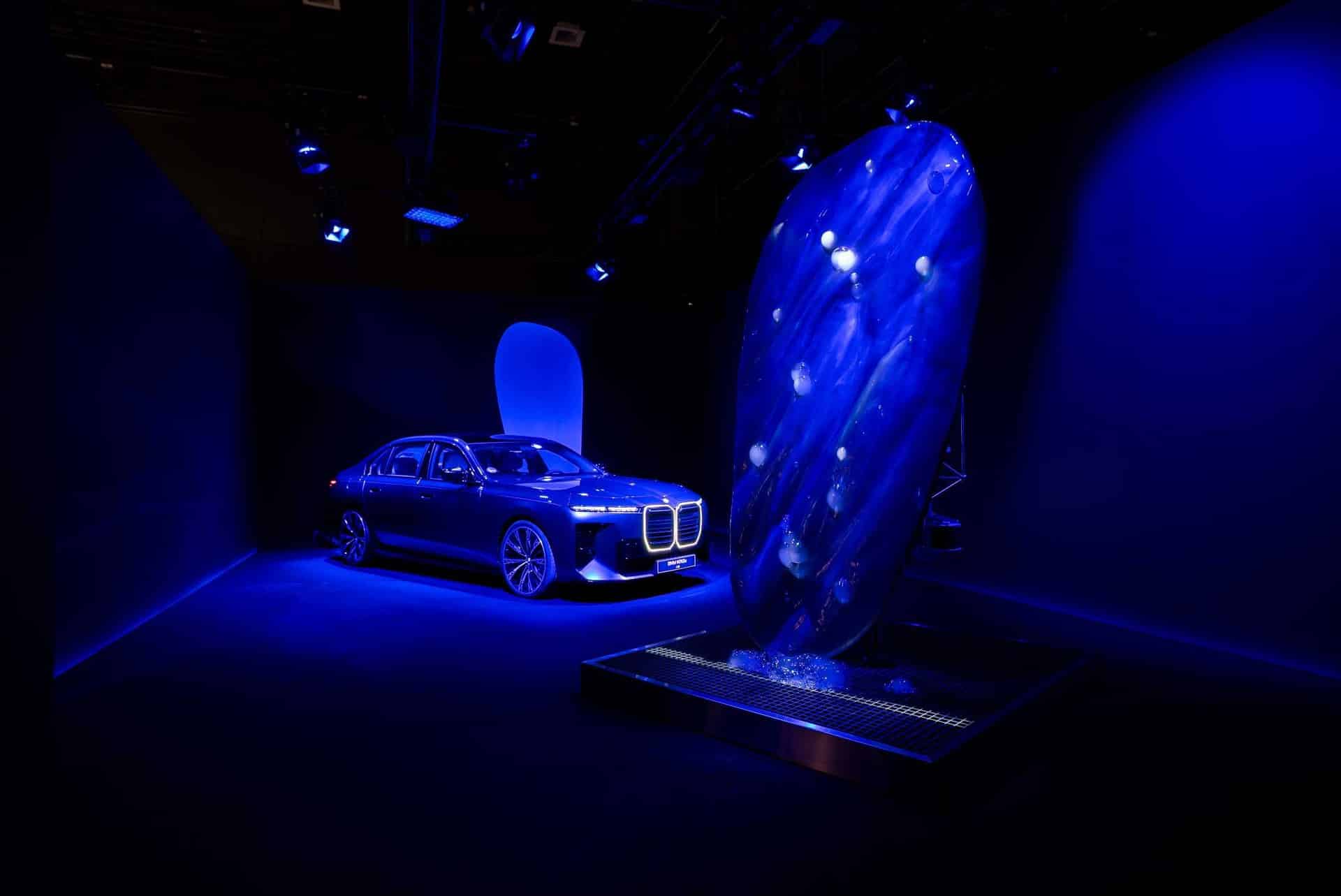
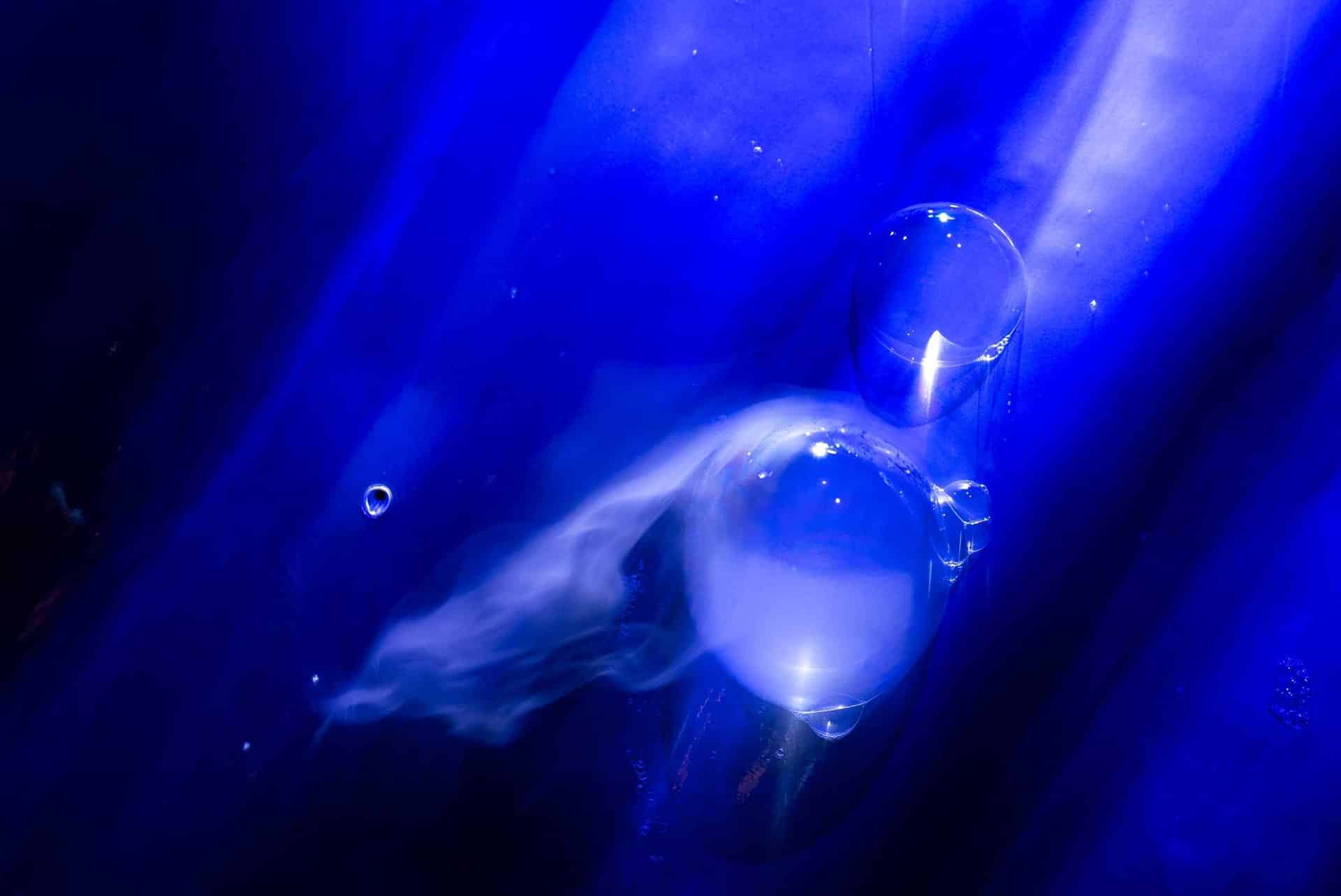
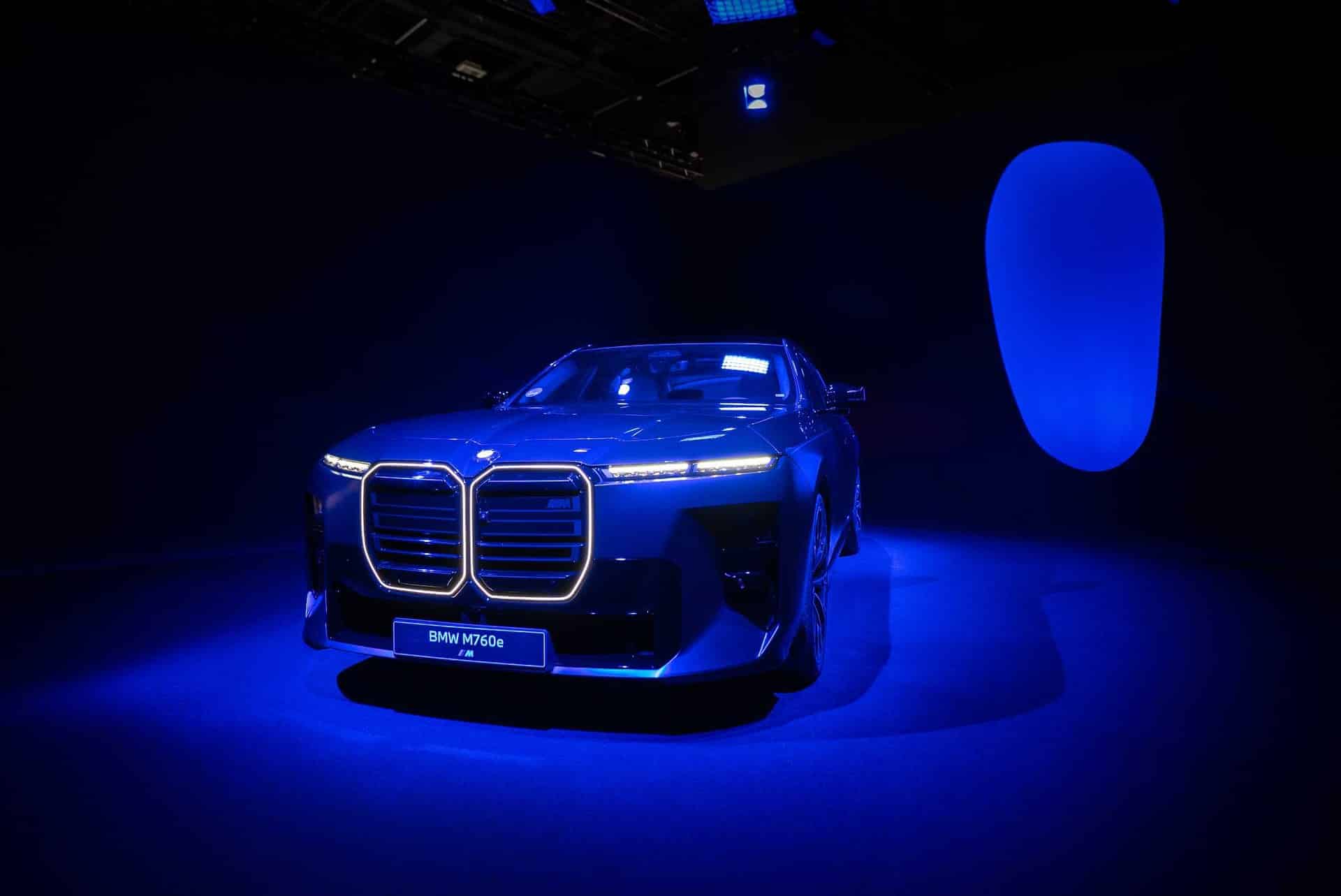
A.A. Murakami’s SYMBIOSIS in Hall 1 at Art Basel, around the BMW M760e xDrive. (Photo: BMW Group)
At Art Basel in Basel this week, the newest piece of BMW engineering is busy dissolving. In Hall 1, from 15 to 21 June, the artist duo A.A. Murakami have built an immersive installation called SYMBIOSIS, in which technical structures throw off bubbles, light and mist that drift and pop and reform around a new BMW M760e xDrive. A carmaker has chosen, at the world’s most prestigious art fair, to make its technology vanish rather than list it. That choice is the whole point.
The duo are Azusa Murakami, from Japan, and Alexander Groves, from the UK, a London and Tokyo pair once known as Studio Swine. Their signature is what they call “ephemeral tech,” which they describe as using advanced engineering “not to create virtual simulations, but to work directly with physical reality itself.” No screens, in other words. Real matter, shaped by real forces, which is a quietly pointed stance to take in a year when so much brand work leans on synthetic sizzle.
What a visitor meets is a constantly shifting environment, fleeting phenomena that evolve unpredictably as they interact with air, gravity and temperature, staged around the car. The sources stop short of the room’s exact mechanics, so we will too, but the conceptual hook is clear enough. Once a bubble is released, the artists say, “its final form belongs to gravity, airflow, temperature, entropy and chance,” and that surrender, they add, “is what symbiosis means to us.”
That word is doing the translating. The installation expresses BMW’s Neue Klasse “Symbiotic Drive” philosophy, which the company frames as driver and vehicle working as a coordinated system, human intention and intelligent assistance interacting. It is worth being precise here, because the art’s human-and-machine harmony makes the slip easy: Symbiotic Drive is Level-2 driver assistance, not a self-driving system, and responsibility stays with the person behind the wheel. The bubble is the metaphor; the car is still being driven.
Strip away the spectacle and this is a study in brand patronage, the anti-spec-sheet flex. Rather than sell its engineering on numbers, BMW is expressing a philosophy through commissioned art, making the technology feel human and emotional instead of technical. It is the quiet-luxury alternative to loud activation, prestige built by association rather than by shouting.
It is also not a one-off, which is the strongest argument that it is genuine. BMW commissioned Es Devlin’s SURFACING at Art Basel in 2024 and Alvaro Barrington’s “Simply, 2025” the year after, part of a patronage programme stretching back through the Art Cars and decades of partnership with the fair. A sustained commitment to real artists with real practices reads very differently from a logo bolted onto a sculpture.
Which brings the honest question. Is this a genuine cultural contribution, or art-washing a luxury-car launch? A product sits literally at the centre of an art fair, and brand patronage has long drawn the critique that it buys cultural capital and instrumentalises artists. The goal is a halo, and a halo is association, not obviously recall or sales. SYMBIOSIS only opened on 15 June, so there is no evidence yet either way, and it would be dishonest to imply otherwise.
For brand and marketing teams, the lesson is that cultural patronage can build the kind of equity advertising can’t, but only on real terms: a genuine artist, a genuine conceptual fit, and true commissioning rather than sponsorship dressed up. The limit is built in. It is slow, expensive, prestige-first and hard to measure. You commission work this good to be admired, and admiration is not the same as being remembered when someone is actually buying a car.