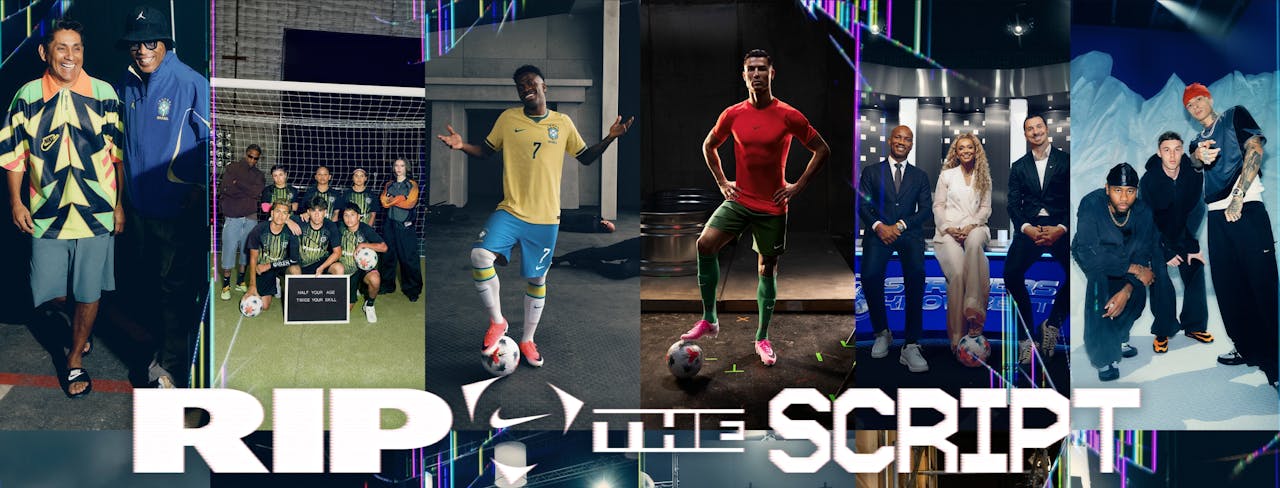
Adidas has been the official FIFA World Cup partner since 1970. It supplies the match ball, the Trionda, and outfits fourteen national teams, so it is in every game by right, whatever its advertising does. Nike has no such badge. It dresses twelve teams, Brazil and France and England among them, but it isn’t a FIFA partner and can’t buy its way into the venue. So it did the next best thing, and arguably the more interesting one. It bought the streets instead.
That is ambush marketing in its most expensive form. Nike’s version runs under the banner “Rip the Script,” part of its Universe of Nike Football, a roughly twelve-week push across the Americas. The logic is clean. Official status is entitlement; you’re present whether your work is good or not. A challenger can’t rent that, so it competes on attention and participation, building cultural real estate rather than tournament signage. You can’t be ambushed out of a venue you built yourself.
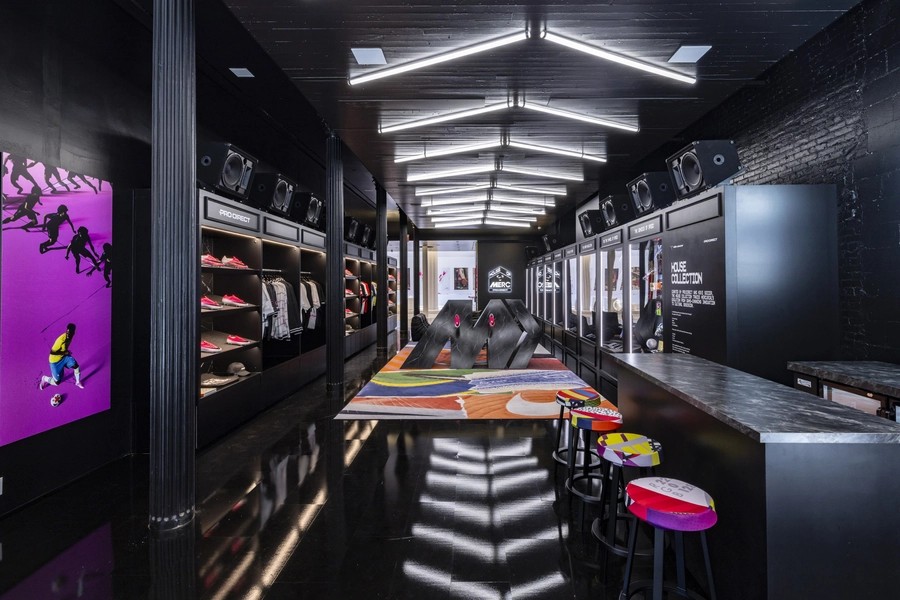
The spine of the thing is physical. In SoHo, House of Merc at 21 Mercer Street, run with Pro:Direct Soccer, is a Mercurial-boot culture space with rare archive product and customisation. In Dallas, The Roof at Vanta turns a rooftop into a tournament headquarters with daily pickup games. Nike says the wider programme touches more than 5,000 retail locations, its own figure, not an audited one. But the number is beside the point; the idea is what travels.
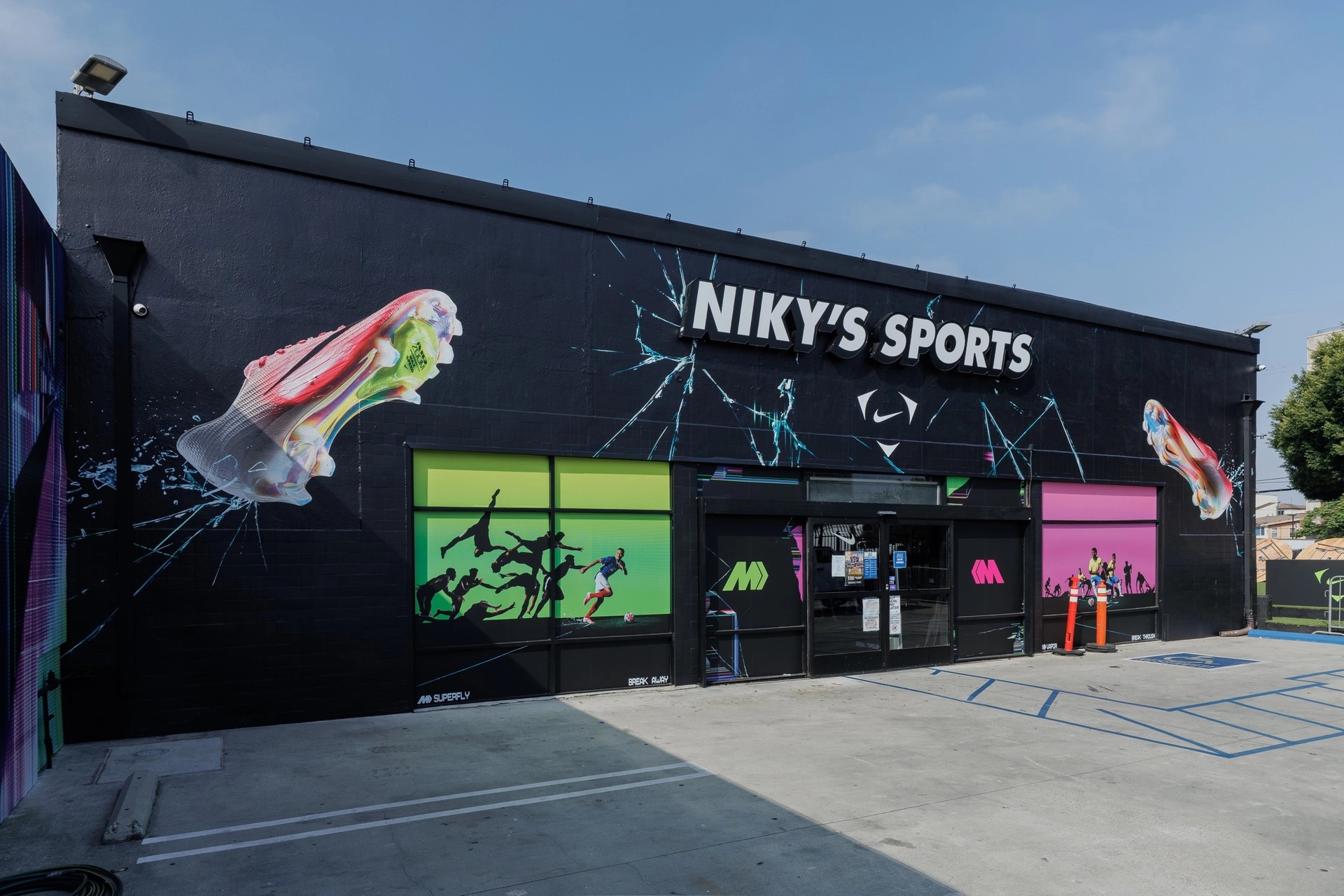
The clearest expression of it is in Los Angeles, where Nike took over Niky’s Sports, a forty-year-old community soccer store on 7th Street, and turned it into Estadio Niky’s. “In our 40 years of business,” Niky’s CEO Luis Orellana said, “our partnership with Nike has been one of the most impactful.” Inside there’s a custom-built indoor pitch and a Mercurial-focused football lab, with what Nike describes as hyperlocal customisation and product testing alongside local artists and food. Nike hasn’t spelled out exactly what a visitor does in that lab, so we won’t pretend to, but the shape of it is the lesson: you don’t browse a wall of boots, you play, test and personalise on site. This is experiential retail as a playground.
Underneath the flagships sits the grassroots floor, a street-football series called Toma el Juego that Nike says spans more than 100 tournaments across six continents and more than twenty cities. That layer gives the retail spaces their credibility: culture earned, not just rented. There is also a six-minute film from Wieden+Kennedy stacked with footballers and famous faces, but treat that as the wrapping. The build is the gift.
A note of honesty, because the work deserves a clear eye. This is ambush at Nike scale, a tactic as old as the 1990s with a far bigger cheque behind it, and every flattering number here is brand- or analyst-sourced. Not everyone admires it; New Balance’s Jeff McAdams pointedly distanced his brand, saying “we’re not a company that is just trying to have logo recognition.” And the playground isn’t Nike’s alone, with Adidas opening its own Home of Soccer hubs in Toronto and New York.
For Western brand and retail teams, the takeaway is bracing and useful. Zappi found 32 percent of people surveyed this year named Nike as a World Cup sponsor when it isn’t one, a perception win rather than a sales one, but telling. You don’t need the rights to win the moment. You need a space people play in and a series they show up to, timed to it. The idea is now table stakes. The moat is the execution.